
Perplexity vs ChatGPT: which one actually does what you need
Real workflows, not hypotheticals

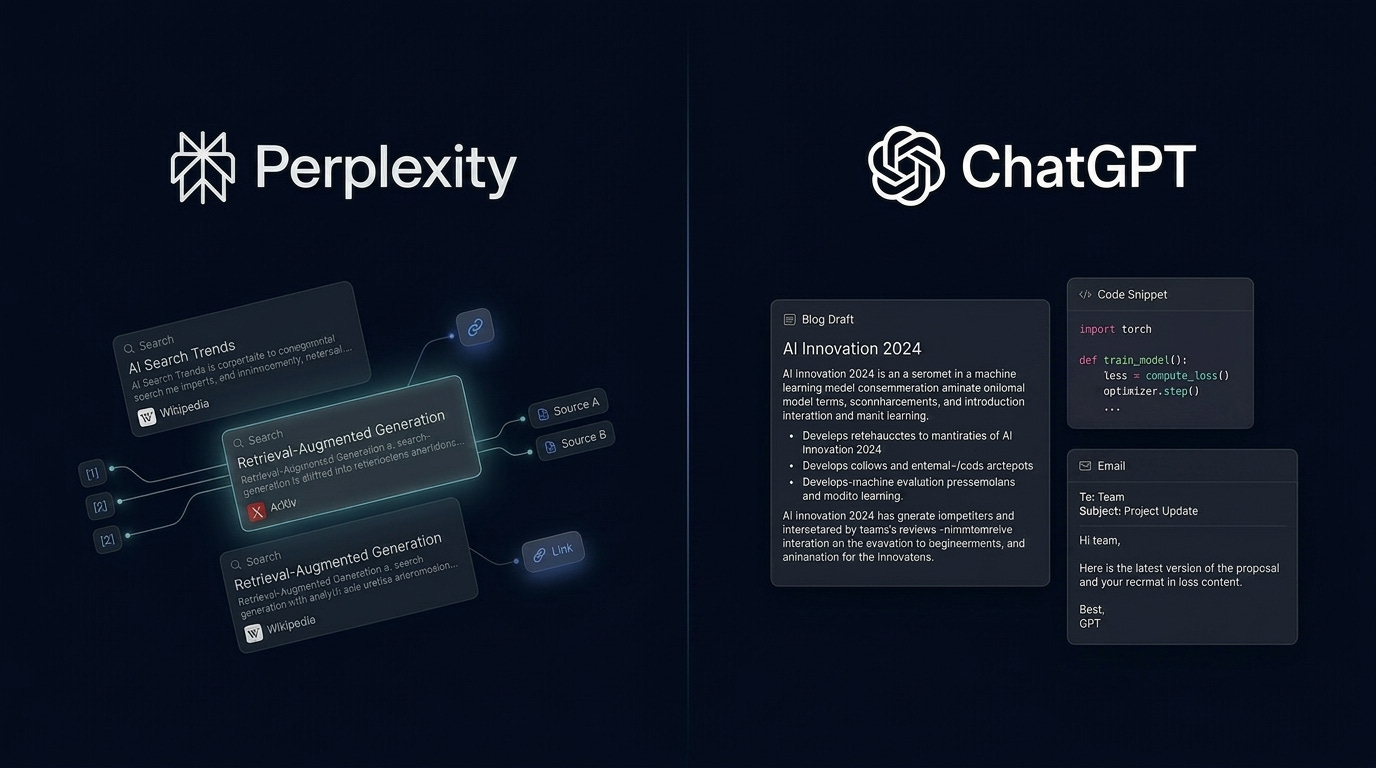
They’re both AI tools. They both take a prompt and give you an answer. But Perplexity and ChatGPT are built for different jobs, and picking the wrong one wastes your time in ways you won’t notice until it’s too late.
ChatGPT is a creation tool. Perplexity is a research tool. That one sentence saves you a 20-minute comparison video.
But the details matter if you’re spending $20/month on either — or both.
What ChatGPT actually does well
ChatGPT generates things. Blog posts, emails, code, image descriptions, brainstorm lists. You give it a task, it produces output. The latest models — GPT-5.2 and GPT-5 mini — handle multi-step reasoning and can break down problems you’d normally whiteboard with a colleague.
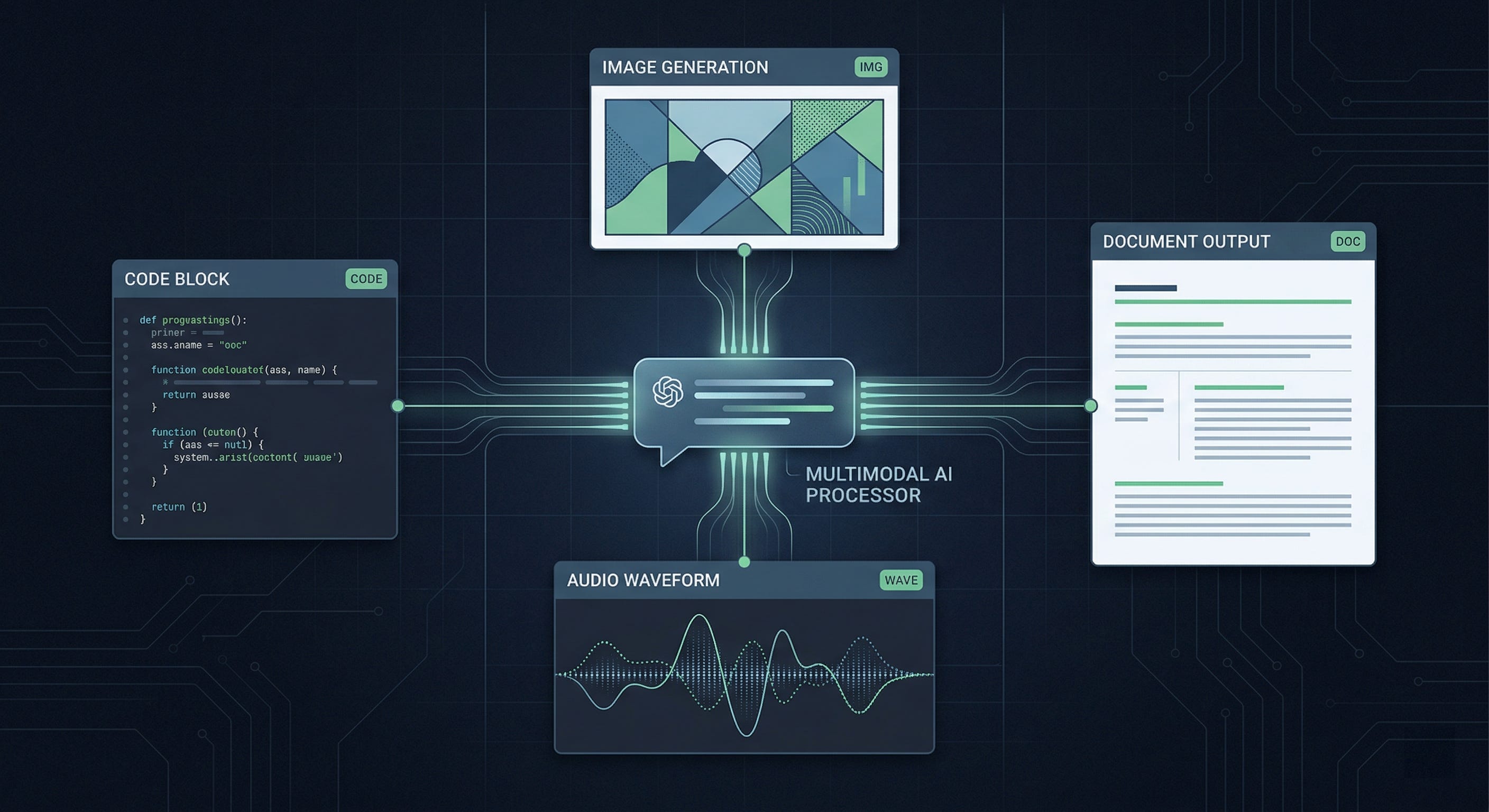
It’s also fully multimodal now. Feed it images, audio, documents. On the phone app, point your camera at a menu in a foreign language and get a translation in real time. That kind of versatility matters when you’re not sitting at a desk.
Where ChatGPT falls apart is sourcing. It doesn’t cite where information comes from unless you specifically ask. And even then, the citations can be stale or flat-out wrong. Web search is available, but it’s bolted on — not baked in. You’re trusting the model’s confidence, not verified sources.
For writing and building, that’s fine. For research, it’s a problem.
What Perplexity actually does well
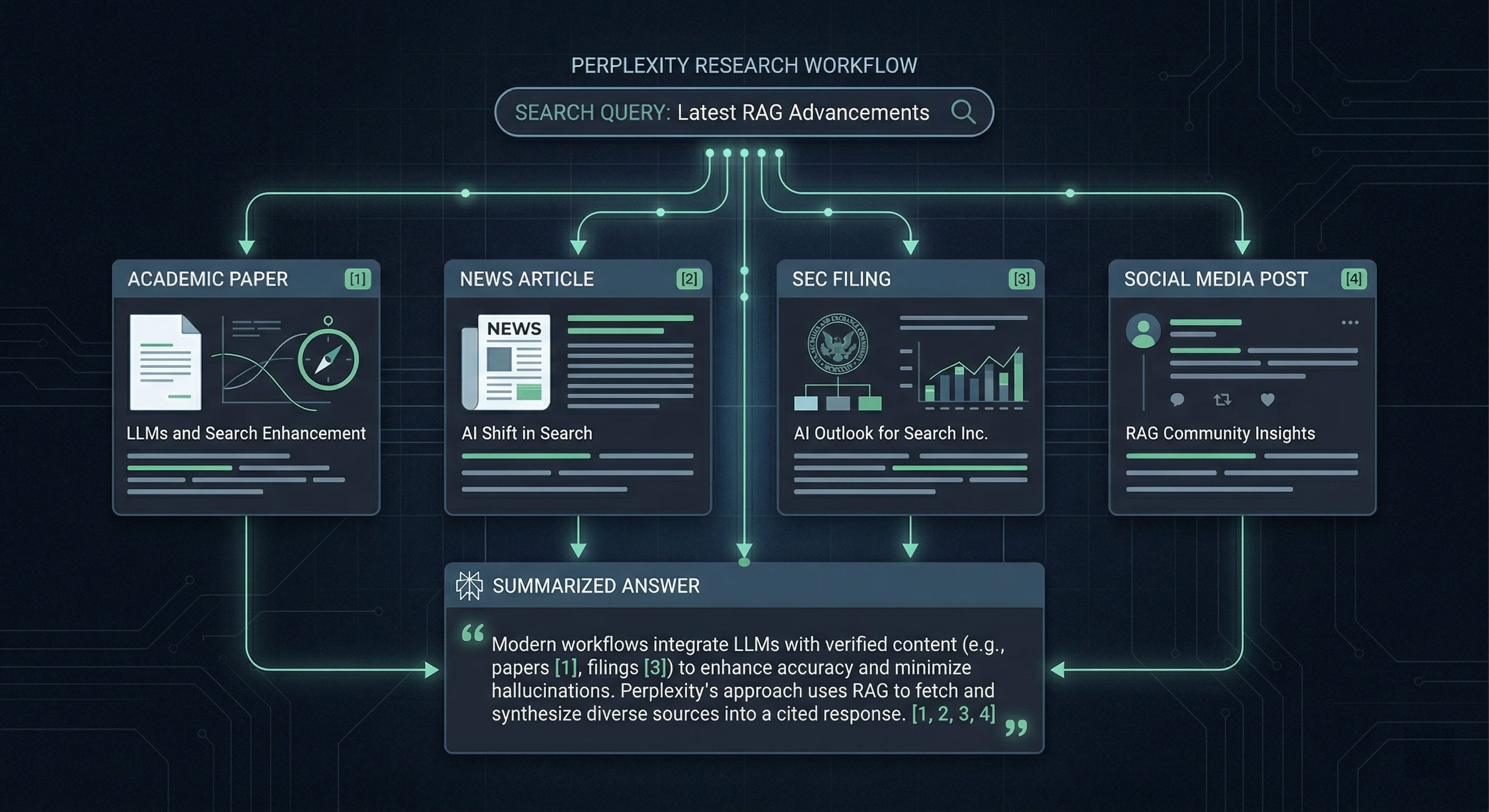
Perplexity searches the live web, pulls from multiple sources, and shows you exactly where every claim comes from. Every answer includes citations with links. You can verify anything it tells you in about ten seconds.
That’s the whole product in one paragraph.
You can also narrow your search scope — full web, academic papers, social media, SEC filings. If you’re digging into a specific domain, this alone makes Perplexity worth the subscription. ChatGPT doesn’t give you that kind of control over where it looks.
Perplexity Pro lets you swap between AI models too — GPT-5, Claude, Gemini, and Perplexity’s own Sonar models. So you’re not locked into one model’s blind spots. For $20/month, that flexibility is hard to match.
The weakness is creation. Ask Perplexity to write a blog post and you’ll get something functional but stiff. It’s built to report facts, not tell stories.
How they compare where it counts
I tested both across the categories that matter most for daily work.
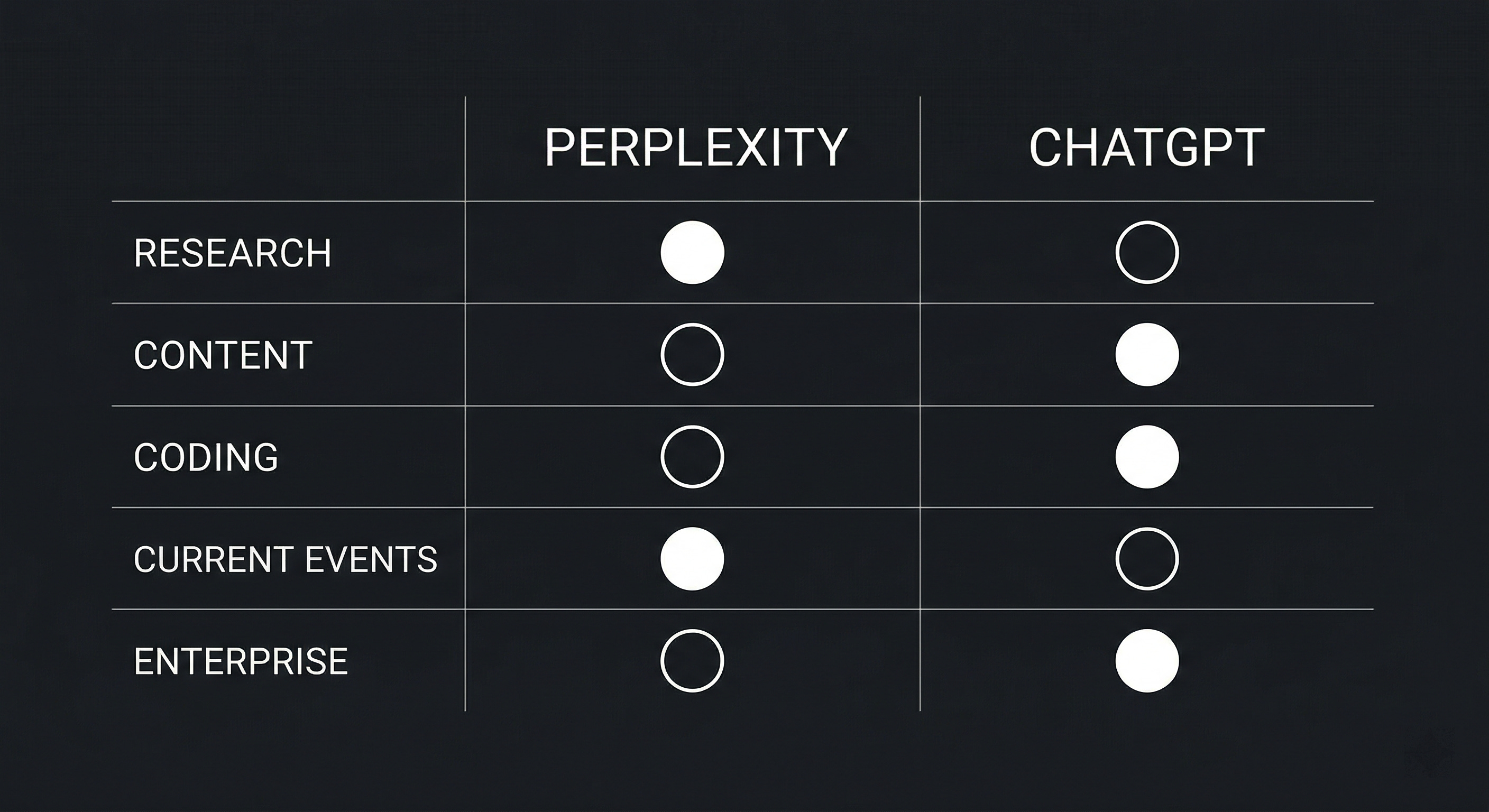
Research and fact-finding: Perplexity wins this one going away. Real-time web access, transparent sourcing, and the ability to filter by source type make it the better research assistant. ChatGPT can search the web, but the results are harder to trace and sometimes pull from outdated pages.
Content creation: ChatGPT. Not close. Whether it’s marketing copy, a technical blog post, or creative writing, ChatGPT produces more polished, audience-aware output. It understands tone and can match a brand voice with minimal coaching.
Coding: ChatGPT has the edge here too. It handles debugging, code generation, and multi-file projects with real nuance. Perplexity can answer coding questions and pull documentation, but it’s not built for iterative development.
Accuracy on current events: Perplexity, and it’s not really debatable. It searches in real time and cites everything. ChatGPT’s training data has a cutoff, and while its web search helps, the integration feels like an afterthought.
Enterprise teams: This depends on what your team does. Teams that produce content — sales, marketing, internal comms — get more from ChatGPT. Teams that consume information — analysts, researchers, compliance — get more from Perplexity. A lot of companies are just buying both, which honestly makes sense.
Real workflows, not hypotheticals
The comparison only matters once you map it to what people actually do. Here’s where each tool fits cleanly into existing work.
If you’re a founder writing investor updates, ChatGPT drafts the narrative and Perplexity fact-checks the market data you’re citing. Write the story in ChatGPT. Verify the numbers in Perplexity. Two tools, one document, no made-up stats in front of your board.
If you’re running a content operation, ChatGPT handles the production pipeline — drafts, rewrites, captions, email sequences. Perplexity handles the research layer underneath. Your writers get verified stats and sourced claims before they touch a first draft. The output quality goes up because the input quality went up.
If you’re a developer building a product, ChatGPT is your pair programmer. Debugging, scaffolding, refactoring. Perplexity is where you go when you need to understand an unfamiliar API, check whether a library is still maintained, or find out what changed in the latest release. One builds. The other informs.
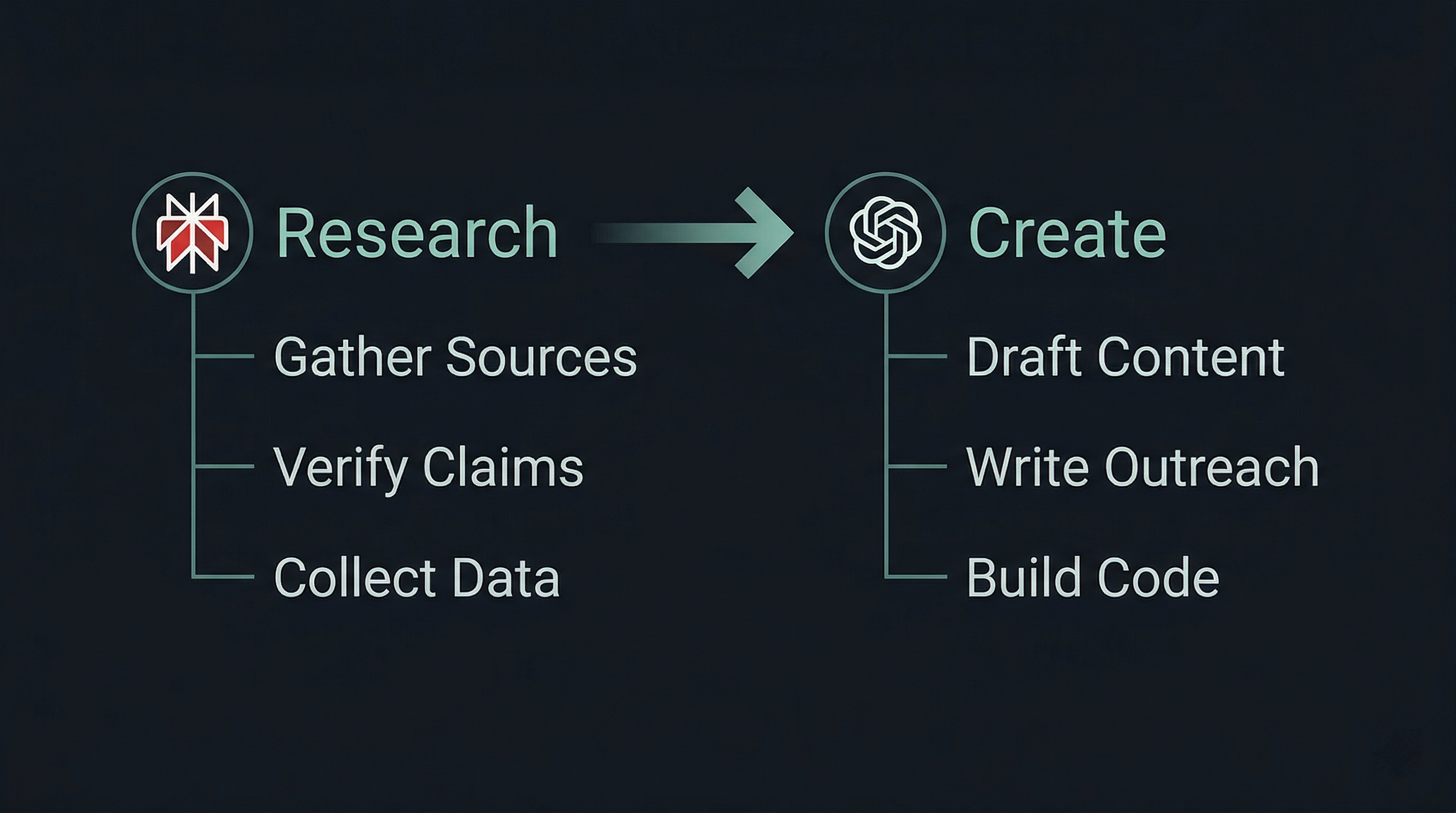
If you’re in sales or business development, ChatGPT writes your outreach — cold emails, follow-ups, one-pagers tailored to a specific prospect. Perplexity researches the prospect — recent funding rounds, leadership changes, tech stack, competitive positioning. You show up to the call knowing things the prospect didn’t expect you to know.
If you’re an analyst or researcher, Perplexity is your primary tool. Pull data from live sources, cross-reference findings, and trace every claim back to its origin. ChatGPT comes in at the end when you need to turn raw findings into a readable brief or a slide narrative.
If you’re in compliance or legal, Perplexity’s ability to search SEC filings and academic papers makes it the starting point. ChatGPT helps you turn dense findings into language that non-legal stakeholders can actually parse.
The pattern across all of these is the same. Perplexity handles the “what’s true” layer. ChatGPT handles the “now make something with it” layer. The combination is stronger than either tool alone.
Both cost $20/month
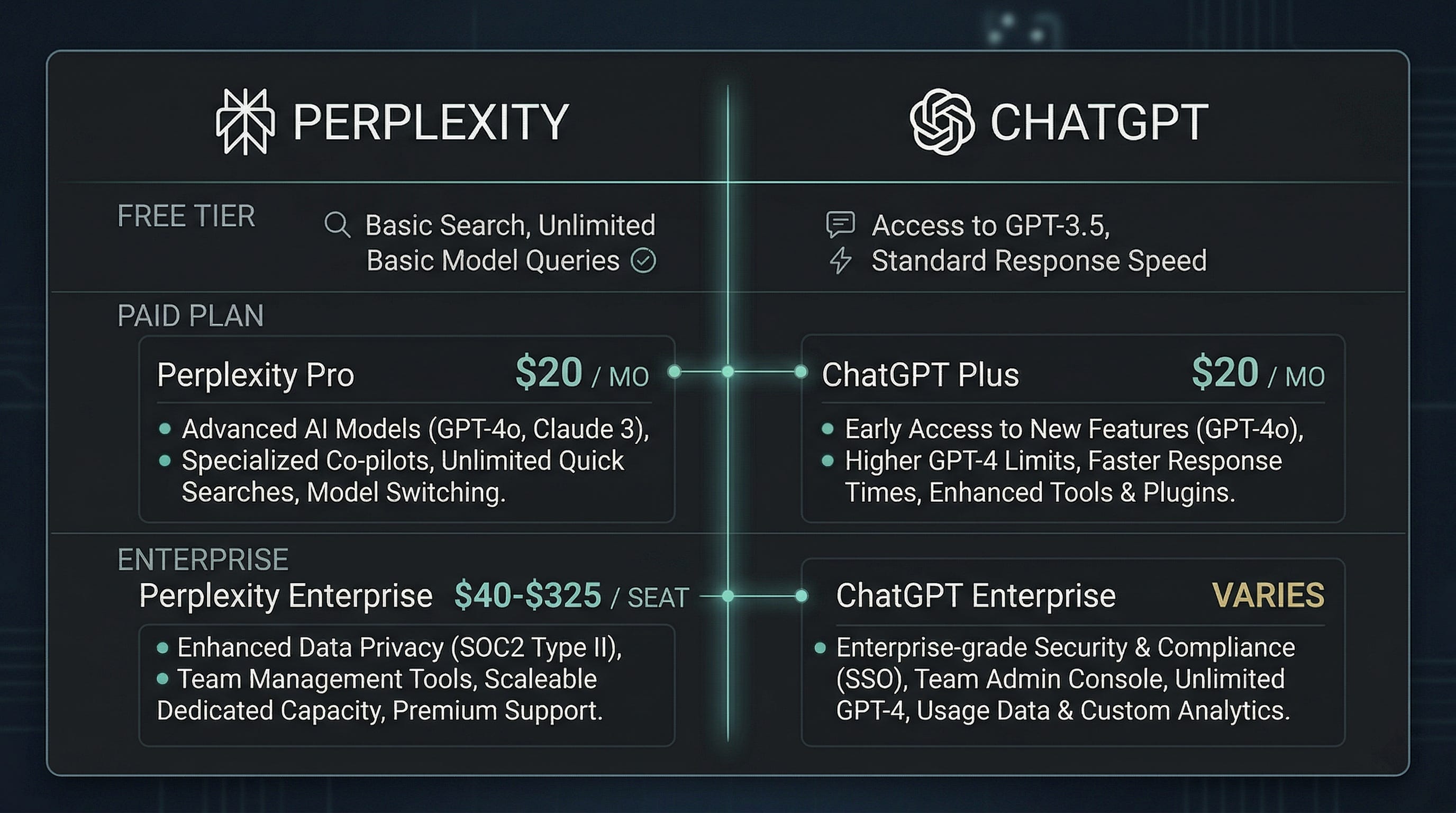
Perplexity Pro and ChatGPT Plus are the same price. Perplexity offers a $200/year annual plan that brings the monthly cost down to about $16.67. ChatGPT has a similar annual option.
At the enterprise level, Perplexity starts at $40/seat/month for Enterprise Pro and runs up to $325/seat/month for Enterprise Max. OpenAI’s enterprise pricing varies by deal size.
The free tiers on both are usable for light work. Perplexity Free gives you basic search with a handful of Pro queries per day. ChatGPT Free now runs on GPT-5.3, which is surprisingly solid for quick questions.
Pick based on what you actually do all day
These two tools aren’t really competitors in the way most articles frame them. They fill different gaps.
If you can only pick one, match it to your primary workflow. If writing and building are most of your day, go with ChatGPT. If research and verification are, go with Perplexity.
If you can swing $40/month for both, that’s the move.
The bigger question most teams skip
Picking the right AI tool is one decision. The harder problem — the one that actually determines whether any of this pays off — is how you wire these tools into your existing workflows without breaking what already works.
Most companies buy AI subscriptions, hand them to their team, and wonder why adoption stalls after two weeks. The gap isn’t the tools. It’s the infrastructure between the tools and your actual operations. Someone has to figure out where the AI layer connects to your CRM, your content pipeline, your internal knowledge base, your customer support flow. That work doesn’t happen by giving everyone a login and hoping for the best.
That’s the kind of problem we work on at Tech Arc Labs. We build AI systems, agentic workflows, and automation infrastructure for founders and enterprises that want to move past the “everyone has a ChatGPT seat” phase into something that actually compounds. If you’re a founder figuring out where AI fits into your product, or an enterprise team trying to turn scattered AI usage into a real operational layer, we’d like to talk. You can find us at techarclabs.com.